
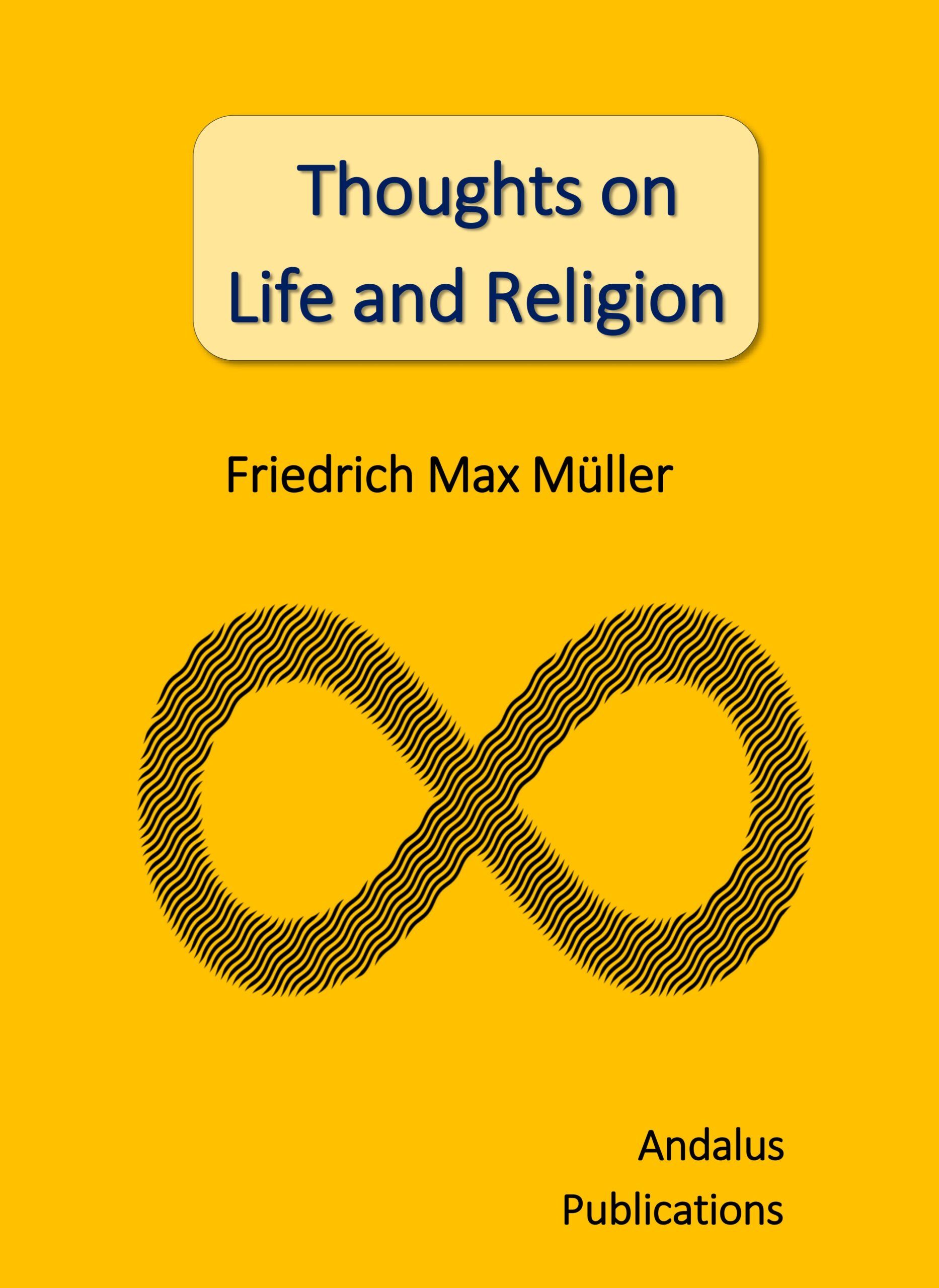
Descripción
Thoughts on Life and Religion is a book by Friedrich Max Müller, a renowned German philologist and scholar of religion. In this book, Müller shares his insights on some of the most important questions in life, such as the nature of religion, the relationship between science and religion, and the importance of tolerance and understanding.
Müller was a devout Christian, but he was also a highly respected scholar of other religions. He believed that all religions have something to teach us, and that we can learn from each other’s traditions. In Thoughts on Life and Religion, he offers a unique and insightful perspective on the nature of religion and its role in our lives.
Thoughts on Life and Religion from Friedrich Max Müller is a collection of essays that explore various aspects of philosophy, theology, and culture. The book is based on the writings of Müller, a prominent scholar of comparative religion and linguistics, who was also a devout Christian.
Here are some of the things you can learn from this book:
What is the nature of religion?
What is the relationship between science and religion?
How can we live a good and meaningful life?
How can we overcome our fears and doubts?
How can we find peace and happiness in a world that is often full of suffering?
How can we promote tolerance and understanding between different religions?
The book covers topics such as the nature of God, the origin of language, the meaning of life, the role of miracles, and the value of different religions. The book is edited by Müller’s wife, Georgina Adelaide Müller, who also provides an introduction and a biographical sketch of her husband. The book is a valuable resource for anyone interested in learning more about Müller’s life and thought, as well as his contribution to the study of religion and culture.
Friedrich Max Müller (1823-1900) was a German philologist, mythologist, and Orientalist who virtually created the discipline of comparative religion. He was born in Dessau, Germany, and studied at the universities of Leipzig and Berlin. In 1846, he traveled to London to study the Sanskrit manuscripts in the East India Company Library. He was so impressed by the richness and complexity of Sanskrit literature that he decided to dedicate his life to its study.
Müller’s early work focused on editing and translating Sanskrit texts. In 1849, he began editing the Rig Veda, the oldest known Hindu scripture. This was a monumental task, and it took Müller over thirty years to complete. His edition of the Rig Veda is still considered to be the standard edition today.
In 1870, Müller began publishing a series of books called the Sacred Books of the East. This series included translations of important religious texts from Hinduism, Buddhism, Taoism, Islam, and other religions. The Sacred Books of the East played a major role in introducing Western scholars to the religions of the East.
Müller’s work has had a profound impact on the study of religion. He is considered to be one of the founders of the modern discipline of comparative religion. His work has also been influential in the fields of Indology, mythology, and religious studies.
Valoraciones
No hay valoraciones aún.