
Descripción
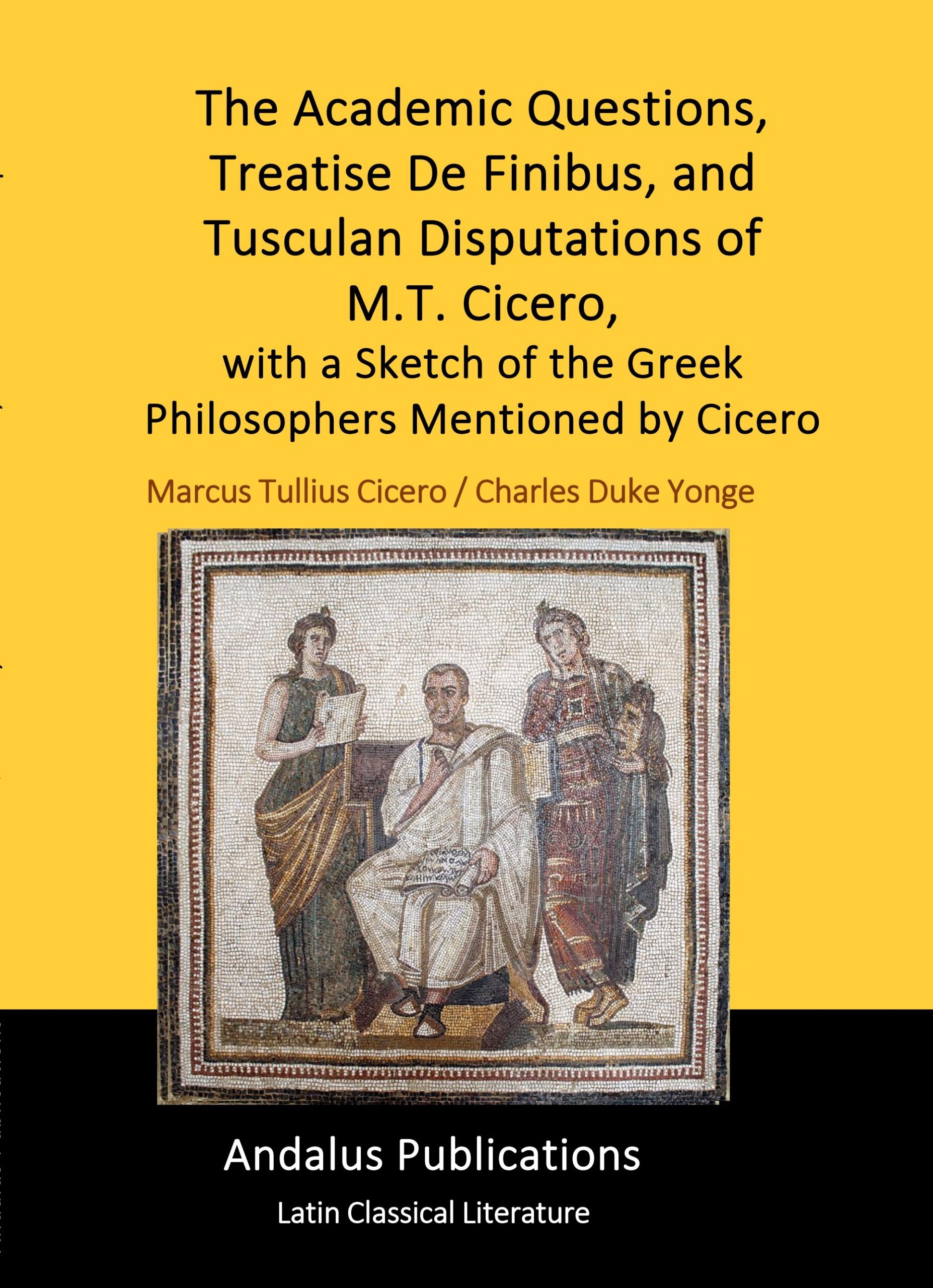
Marcus Tullius Cicero, a towering figure of Roman philosophy, has left an indelible mark on Western thought.
In The Academic Questions, Cicero delves into the nature of knowledge and skepticism, examining the limits of human understanding. Influenced by the Academic school of thought, this text challenges the reader to consider whether absolute knowledge is attainable or whether it is wiser to embrace a more reserved, skeptical approach to truth.
De Finibus Bonorum et Malorum (On the Ends of Good and Evil) is a thorough investigation into ethics, structured as a series of dialogues that compare various philosophical perspectives on the highest good, or summum bonum. Cicero contrasts the ethics of Epicureanism, Stoicism, and the Peripatetic school, dissecting their approaches to pleasure, virtue, and happiness. Here, Cicero’s philosophical acumen shines as he articulates the strengths and weaknesses of each school. He advocates for an ethical path rooted in reason, aligning most closely with Stoic values of virtue as the highest good, but he also presents each view fairly, offering a balanced account.
The Tusculan Disputations is arguably the most personal and compelling of the three works, as Cicero turns to philosophy for consolation in the wake of personal tragedies. Organized as five dialogues, this treatise addresses questions central to human existence: overcoming grief, managing fear of death, controlling pain, achieving happiness, and cultivating virtue. Through these reflections, Cicero’s stoic leanings are evident as he seeks to offer a practical philosophy for enduring life’s hardships.

Valoraciones
No hay valoraciones aún.