
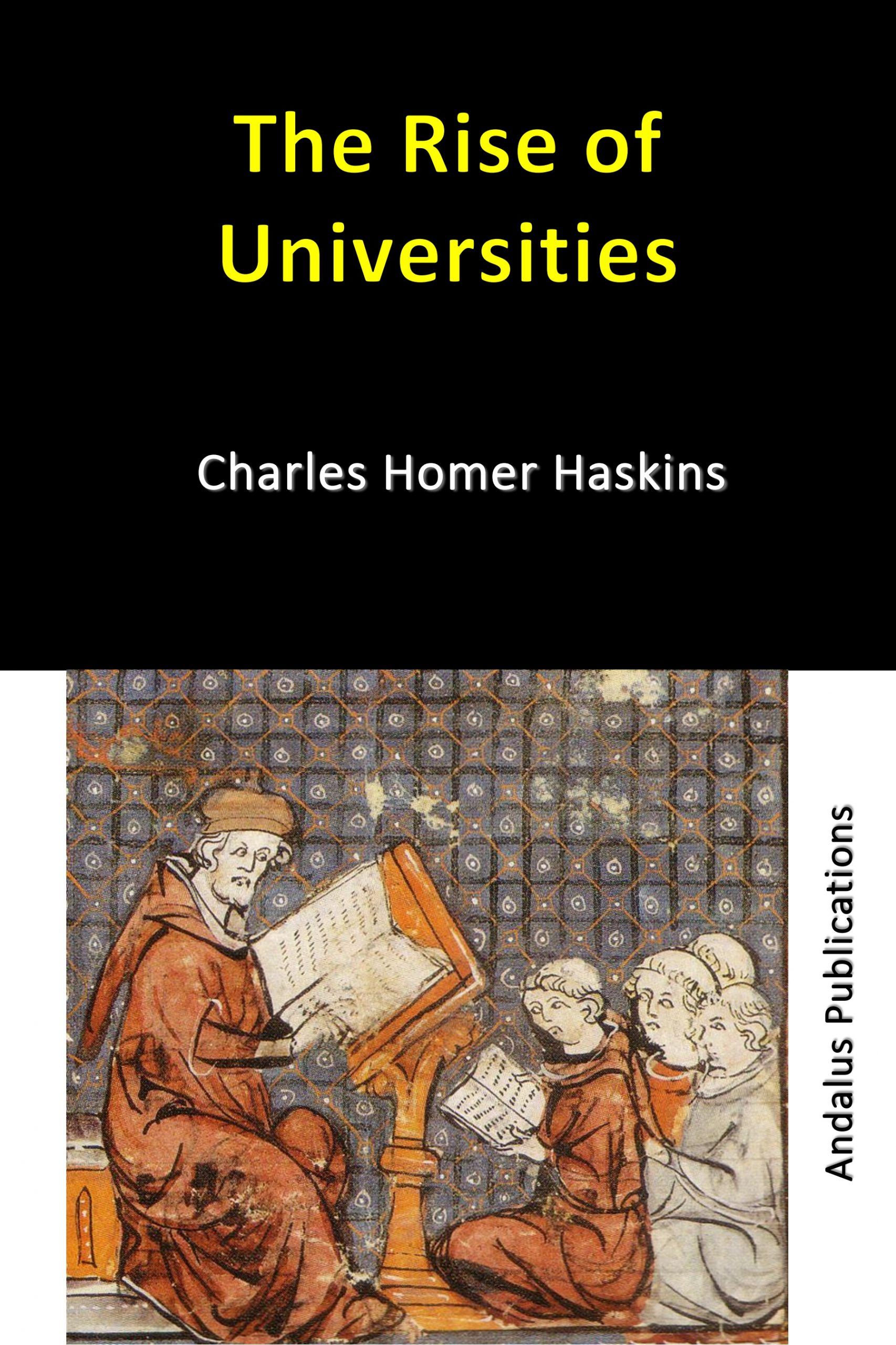
Descripción
The Rise of Universities by Charles Homer Haskins is a classic work of medieval history that traces the origins and development of universities in Europe. It remains a valuable resource for anyone interested in the history of higher education.
Haskins begins by providing a brief overview of the educational system in the early Middle Ages. He then discusses the factors that led to the rise of universities, such as the revival of learning in the 12th century, the growth of cities, and the increasing demand for educated clergy. He also examines the curriculum of the early universities, the role of teachers and students, and the organization of university life.
One of the strengths of Haskins’ book is its attention to detail. He provides a wealth of information on the history of specific universities, such as Bologna, Paris, and Oxford. He also discusses the different disciplines that were taught at universities, such as law, medicine, and theology.
Another strength of the book is its clear and concise writing style. Haskins does not shy away from complex topics, but he explains them in a way that is accessible to the general reader. He also provides helpful illustrations and maps to help readers visualize the material.
Haskins traces the origins of the university as a corporate body of scholars and teachers, and describes the curriculum, methods, and organization of the medieval faculties. He also gives a vivid picture of the life and culture of the medieval students, based on their manuals, letters, and poetry. Haskins also shows how the university influenced and was influenced by the social, political, and religious context of its time.
Charles Homer Haskins was an American historian of the Middle Ages. He was born in Meadville, Pennsylvania, on December 21, 1870. He was a prodigy, fluent in both Latin and Greek while still a young boy, taught by his father. He graduated from Johns Hopkins University at the age of 16, and then studied in Paris and Berlin.
After returning to the United States, Haskins taught at the University of Wisconsin and then at Harvard University, where he remained for the rest of his career.
Haskins was a prolific scholar, publishing over 200 books and articles. Haskins’ work was instrumental in changing the way medieval history was studied. He challenged the traditional view of the Middle Ages as a period of darkness and ignorance, and showed that it was a time of great intellectual and cultural achievement. He was also a pioneer in the study of the history of science, and his work helped to demonstrate the importance of medieval science to the development of modern science.
Haskins’ legacy is immense. He is considered one of the most important medieval historians of the 20th century. His work has had a profound impact on our understanding of the Middle Ages, and it continues to be studied and cited by scholars today.


Valoraciones
No hay valoraciones aún.